

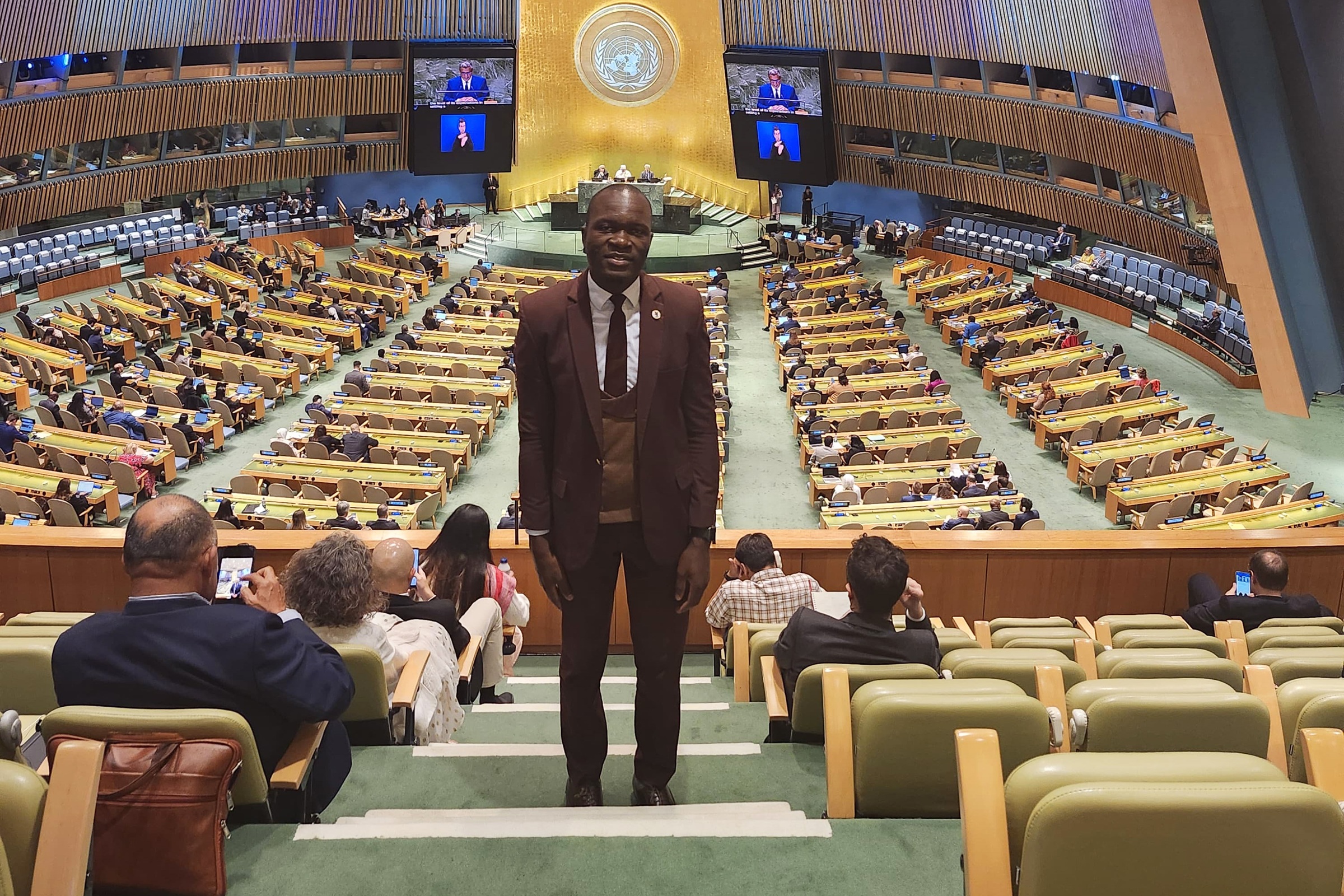

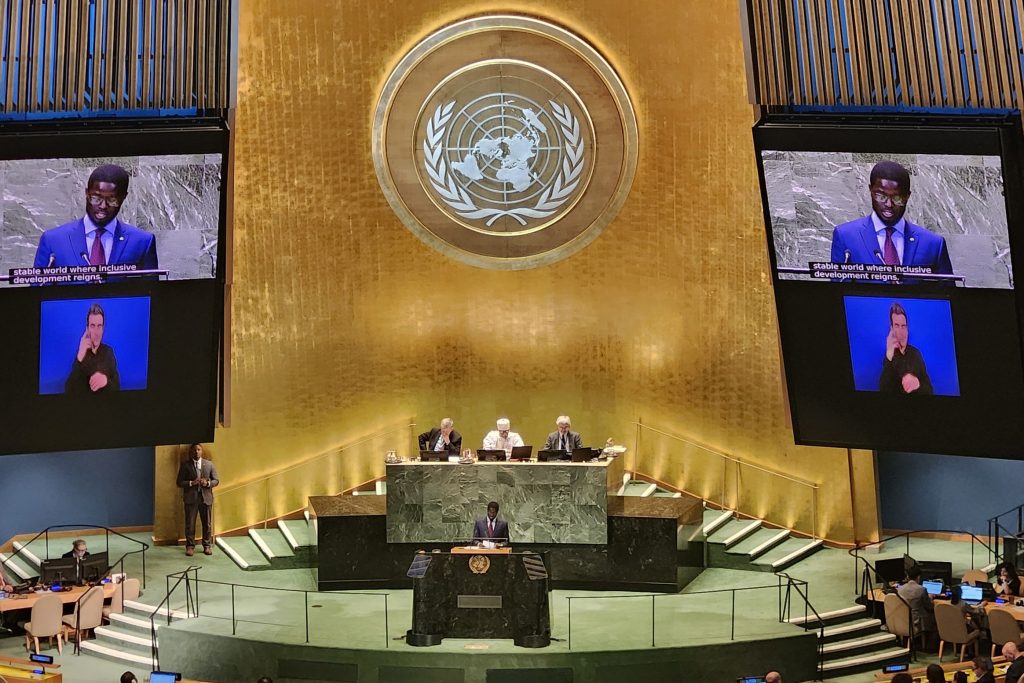
Standing in the General Assembly Hall for the adoption of the Pact for the Future felt like stepping into a hinge moment for multilateralism. Leaders were frank, most of them in agreement that the progress on achieving the Sustainable Development Goals (SDGs) is still slow, especially in poverty, hunger, and inequality, and mounting climate and environmental risks. Yet the Pact doubles down, setting out 56 actions across 5 pillars, with SDG delivery at the center of a renewed global compact.
Below are my highlights from the Seventy-ninth session of the United Nations General Assembly (UNGA79) week, inside the Summit of the Future and across aligned side events, and how Champions for SDGs Youth is translating them into near-term actions:
- Financing the SDG Gap
The Pact’s first action commits countries to bold, ambitious, accelerated, just, and transformative measures to implement the 2030 Agenda, achieve the SDGs, and ensure no one is left behind. It also urges follow-through on the 2023 SDG Summit political declaration and the mobilization of resources from all sources. Acknowledging the SDG financing shortfall, the Pact calls for SDG-scaled official development assistance, enhanced tax cooperation, and catalytic private investment, culminating in a drive for an ambitious outcome at the subsequent Financing for Development conference. Champion for SDGs Youth continues to advocate for concessional capital, blended finance, and domestic resource mobilization that support inclusive growth through mutual and strategic partnerships.
2. Climate Action, Nature, and a Just Transition
In sessions hosted by the UN Global Compact, we explored corporate policy engagement for Paris-aligned pathways, net-zero targets through the Science-Based Targets initiative, and the role of blended finance in unlocking sector transitions, identifying concrete levers for Champions for SDGs Youth. The Pact complements this by reaffirming the 1.5°C goal; calling for deep, rapid emissions cuts; tripling global renewables; doubling energy-efficiency improvements; and scaling adaptation finance and loss-and-damage funding. It also sets out a nature-positive agenda, halting and reversing biodiversity loss, advancing circular economy approaches, and concluding a treaty on plastic pollution, which dovetails with youth-led community initiatives on waste, forests, and water. At the UNEP event on “Empowering Youth for a Sustainable Future,” leaders emphasized equipping young people with the skills for a just transition, renewable energy, conservation, and equity-centered green jobs, the very capacities that Champions for SDGs Youth cultivates across its network.
3. Prioritizing Youth Agency
The Pact includes a dedicated pillar on Youth and Future Generations, committing to invest in children and young people so they can reach their full potential and to strengthen meaningful youth participation at national and international levels. For us, this formalizes the role youth must play not merely as beneficiaries but as co-designers and decision-makers. On the sidelines, the Youth Power Summit revisited UNSC Resolution 2250 on Youth, Peace and Security and the slow progress toward youth representation in decision-making. The prescription was practical: create youth-friendly spaces, resource youth ideas, and embed youth in peace and security processes, core design principles we advocate in country programs. The Pact also renews commitments to UNSC Resolution 1325 on women, peace, and security, a call that Champions for SDGs Youth will answer by integrating gender equity and youth-centric leadership in conflict-sensitive programming and civic engagement.
4. A Call For Fairer Governance and Global Finance Systems
Multiple leaders raised long-standing demands from countries of the Global Majority: meaningful Security Council reform and broader representation. The Pact’s governance pillar echoes this, with commitments to transform global governance, reform the Security Council, revitalize the General Assembly, and strengthen ECOSOC – the venues where SDG ambitions become budgets and mandates. That theme resonated throughout the UNGA week, from calls to expand permanent seats for Africa and Latin America to youth appeals for greater legitimacy and accountability. These reforms are not abstract; they set the stage for more equitable SDG delivery, especially in Africa, small states, and climate-vulnerable countries.
5. From Aid to Agency
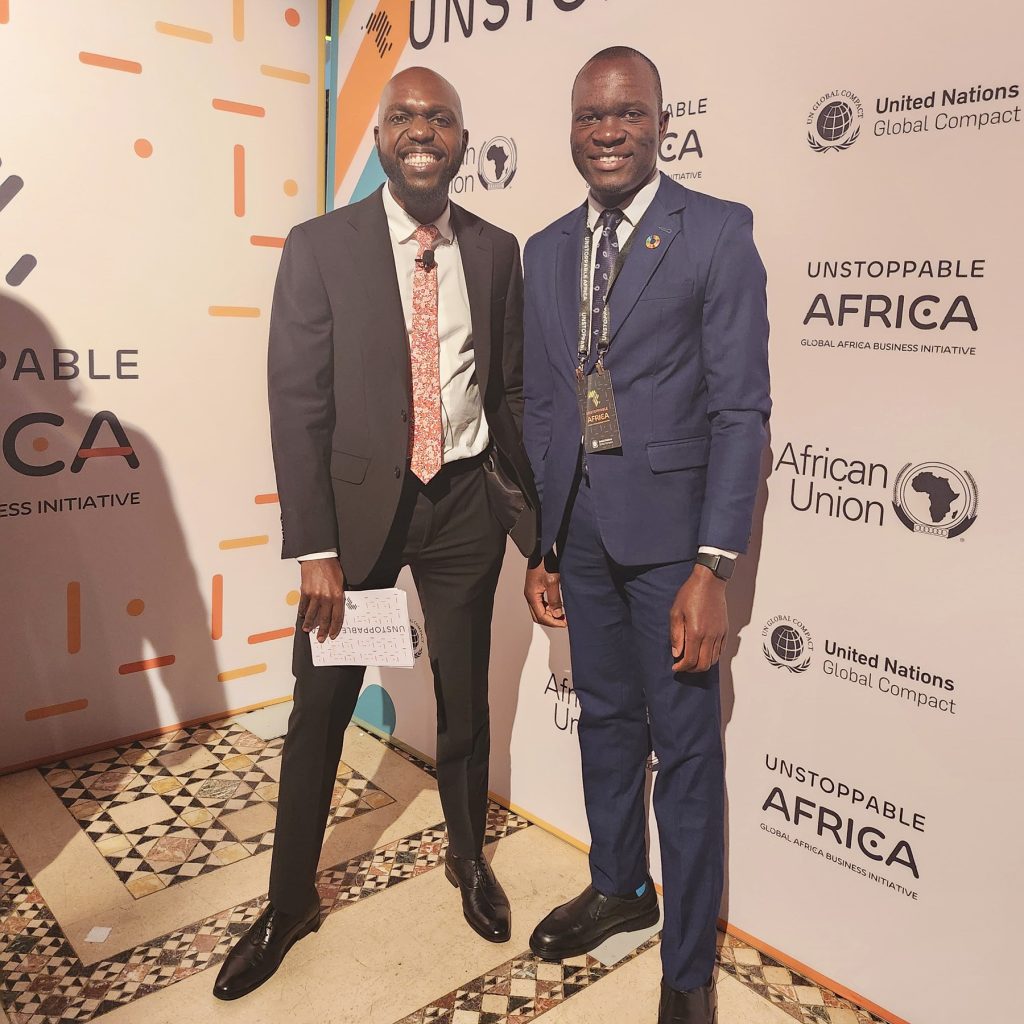
At the Unstoppable Africa Forum, the message was unmistakable: unlock Africa’s potential through expanded energy access, digital innovation, creative industries, and intra-African trade, shifting from donor dependence to self-determination. Dr. Ngozi Okonjo-Iweala challenged delegates to “get off the donor syndrome mentality,” capturing the mindset shift our young entrepreneurs already embody. The Generation Unlimited session, backed by UNICEF and the African Union, underscored the partnerships needed to channel capital and mentorship to Africa’s youthful demographic dividend, precisely where youth-led solutions to SDG 4 (quality education), SDG 5 (gender equality), SDG 8 (decent work and economic growth), and SDG 9 (industry, innovation, and infrastructure) converge.
6. Digital Acceleration for SDGs
The Pact’s Global Digital Compact commits to closing all forms of digital divide and using digital transformation as a powerful driver of SDG progress. This includes not only improving access to affordable, reliable connectivity but also ensuring that people have the devices, platforms, and services they need to participate meaningfully in the digital world. It further emphasizes expanding inclusion in the digital economy so that young people, women, marginalized communities, and those in low-income or remote areas can benefit from digital jobs, entrepreneurship, and innovation opportunities. At the same time, it calls for robust, responsible AI governance that protects human rights, promotes transparency and accountability, and guards against bias and harm.
For Champion for SDGs Youth, this agenda acts as a normative backbone and clear mandate. It positions connectivity, devices, and digital skills not as optional add-ons, but as foundational enablers of every SDG from education and health to climate action and decent work. It also underscores the importance of promoting ethical, human-centered technology, where AI and other emerging tools are designed, deployed, and governed in ways that advance inclusion, safeguard young people, and accelerate progress for people and planet.
In conclusion:
The Pact for the Future is less a new plan than a now plan: a renewed commitment to the SDGs with sharper tools, financing, governance reform, climate–nature alignment, youth participation, and digital public goods. As we left New York, our task was clear: turn the Pact’s verbs into our verbs, train, finance, co-govern, and measure, so that by the next review, young people can point to progress that is real, local, and lasting.
Next Steps:
- Keep an eye on the Champions for SDGs Youth events page to catch and participate in subsequent parts of the Youth Localizing the Pact for the Future conversation.
- You are welcome to check out the LIVE recording of the first Youth Localizing the Pact for the Future session that Champions for SDGs Youth organized in collaboration with the International Economic Partnerships and Frameworks Coordination Directorate, State Department for Economic Planning, the United Nations Resident Coordinator’s Office, the SDGs Kenya Forum, the UNESCO Youth Forum Kenya, and the National Youth Council Kenya.
Written by: Samuel Budoi – Chairperson of the Board