

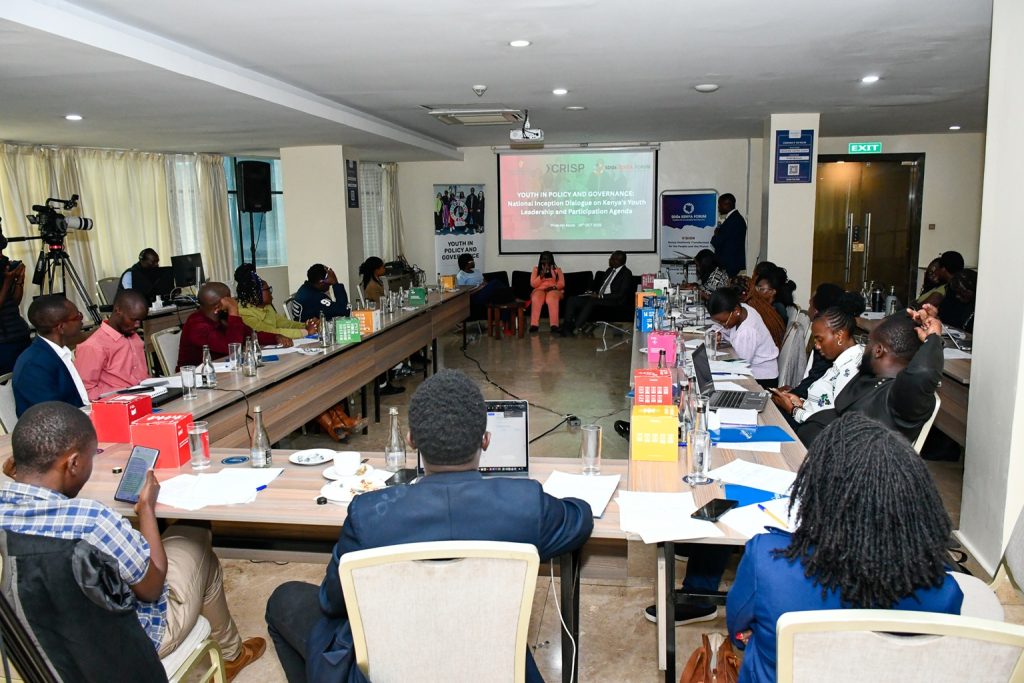
Last week, Arnold and I had the privilege of representing Champions for SDGs Youth at the Nairobi Inception Dialogue on Strengthening Youth Leadership and Policy Advocacy in Kenya. The meeting was convened by the African United Nations Youth Delegate (AUNYD) Programme, the Irish Embassy in Kenya, and the SDGs Kenya Forum.
The room was alive with energy — young leaders, policymakers, and partners all gathered with a shared vision to strengthen youth participation in shaping Kenya’s development agenda. Beyond the formalities and speeches, one thought stayed with me:
Kenyan youth must be heard, not just seen.
For years, youth engagement in governance has often meant being invited to sit in the room — but not at the table. This dialogue felt different. It was intentional, inclusive, and forward-looking. It wasn’t about being represented; it was about being recognised as co-creators of policy and progress.
Shaping the Youth Policy Agenda
Discussions centred on aligning Kenya’s key policy frameworks — the Youth Bill (2024), the AI Strategy (2025–2030), and the Persons with Disability Act (2025) — with global commitments such as the Pact for the Future, UNSCR 2250, and ILO Resolution 205.
Recognising that policy only matters when it reaches the people it’s designed to serve, participants called for policies that go beyond paper promises — policies that translate into real opportunities in employment, education, technology, and inclusion.
Pact for the Future – Action Areas 34, 35 and 36
The session, led by Ms Linda Akitela, Executive Planner at Turkana County, unpacked the UNGA 2023 Pact for the Future resolution. She emphasised youth participation, socio-economic rights, and inclusion — especially for young people with disabilities. The discussion urged a shift from tokenism to real participation by embedding youth in decision-making spaces, strengthening accountability, and promoting merit-based engagement. It concluded with a collective call for evidence-driven advocacy and shared responsibility in shaping Kenya’s National Youth Governance and Participation Mandate.
Panel Discussion – Strengthening Youth Policy, Inclusivity and Governance Reform
Johnson Rithu – National Youth Council (NYC)
Johnson underscored the National Youth Council’s mandate to represent youth interests and strengthen linkages with partner organisations. He shared ongoing efforts to mobilise resources, enhance digital engagement, and create innovation spaces to reach more young people. Yet he acknowledged the challenges — limited financing, uneven reach, and capacity gaps — that restrict grassroots impact. He called for leveraging technology to bridge these barriers and enhance youth participation in governance and entrepreneurship.
Terry Atieno – Africa Diaspora Network in Japan
Terry brought a sharp policy lens to the conversation, stressing that the proposed Youth Bill (2024) must be genuinely youth-led, inclusive, and aligned with the National Youth Policy (2019). She highlighted that youth voices must be embedded at every stage of policy design and implementation to ensure ownership and accountability. Terry also urged stronger alignment between national youth priorities and global frameworks like the Pact for the Future, advocating for open, transparent, and participatory policy processes that reflect the lived realities of Kenyan youth.
Sandra Nyawira – United Disabled Persons of Kenya (UDPK)
Sandra presented the Disability Act (2025) as a significant step toward equality, dignity, and accessibility for persons with disabilities, but noted that awareness among young people remains low. Her powerful statement — “Nothing for us, without us is against us” — became the unifying theme of the discussion. She urged intentional inclusion, data-driven advocacy, and collaboration between youth and disability organisations to ensure inclusivity moves from policy to practice.
Working Groups Introduction – A Call to Action
One poignant moment came during Morris’ presentation on the project overview and the introduction of working groups. He contextualised Kenya’s youth engagement within the broader peace and security landscape, noting that young people across the region face complex challenges — from political intolerance to cultural divides. He called for context-specific approaches that respect local realities while fostering regional stability.
A Generation Ready for Responsibility
My biggest takeaway was the call for accountability – for ourselves as youth. If we demand seats at the table, we must also bring solutions, discipline, and commitment. True inclusion means stepping up, not just showing up.
That’s why I was particularly drawn to the Employment, AI & Economic Inclusion Working Group (EAI-WG). It speaks to where Kenya’s next chapter lies — at the intersection of innovation, inclusion, and impact. I’m excited about contributing to this space, where technology and youth leadership can drive equitable growth.
Looking Ahead
For Champions for SDGs Youth, this experience reaffirmed our mission to raise awareness, foster engagement, and empower young people to take active roles in the realisation of the SDGs.
The dialogue was a reminder that Kenya’s future is being written by the youth of today. We don’t just represent the next generation; we are the generation shaping what comes next.
Impact begins with us — informed, engaged, and unafraid to lead.
Written by: Rebeccah Osugo, Communications Lead