


I recently got my water bill and my heart sank. Sorry, I mean drowned.
Four units.Four whopping thousand litres. For one person.
I found myself staring at the bill, trying to visualize what that amount of water actually looks like. Could anyone really use all that water in a month? The uncomfortable answer, at least for me, was yes.
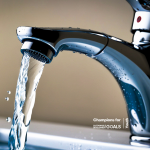
Not because I was filling swimming pools or watering acres of farmland, but because of small habits that rarely cross my mind. A dripping faucet. Leaving the tap running while brushing my teeth. Washing dishes under running water. The little things.
Every litre has a journey behind it. Before it reaches our taps, it has to be drawn from rivers, lakes, reservoirs, or underground aquifers, treated, pumped through kilometres of pipes, and delivered to our homes. Looking at my water bill reminded me that water doesn’t simply appear when we turn on a tap. Each drop represents infrastructure, energy, and careful management.
My reflection comes at a time when the world is taking stock of progress towards Sustainable Development Goal 6 (Clean Water and Sanitation). As delegates gather at the United Nations for this year’s High-level Political Forum on Sustainable Development (HLPF) under the theme, “Transformative, equitable, innovative and coordinated actions for the 2030 Agenda and its SDGs for a sustainable future for all,” SDG 6 is one of the Goals undergoing an in-depth review. Despite significant progress over the past decade, as of 2024, 2.1 billion people still lacked safely managed drinking water and 3.4 billion lacked safely managed sanitation services.[1] Here in Kenya, many households continue to experience water shortages, rationing, or unreliable supply.[2] While SDG 6 is truly about expanding access to water and sanitation, it is also about using water responsibly. When we conserve water at home, we contribute to the larger goal. We reduce pressure on water sources, treatment systems, and distribution networks. We help ensure that future generations can enjoy the same resources that we often take for granted today.
The next time your water bill arrives, don’t just look at the amount due.
Look at the number of units consumed. Convert them into litres.
Pause for a moment and reflect on what that number represents.
For me, four units became more than a meter reading. They became a reminder that sustainability doesn’t always begin with major policies, global conferences, or ambitious projects. Sometimes, it begins at home with a shorter shower, a closed tap, and a little more appreciation for every litre that reaches our homes.
When enough people make those small choices, they become collective action.
Collective action is how we move closer to achieving the Sustainable Development Goals.
References:
[1] United Nations. Sustainable Development Goal 6: Clean Water and Sanitation – United Nations. 2026 Advance Unedited Version of the Secretary-General’s Progress Report on the Sustainable Development Goals.
[2] United Nations SDG 6 Data Portal – Kenya Country Profile
Written by: Rebeccah Osugo, Communications Lead